S Lab
[Sibin Mohan]
Systems Security Research Group at GWU and University of Illinois
Immigrant | Real-Time Migration of Containers
###
Team Members
Overview
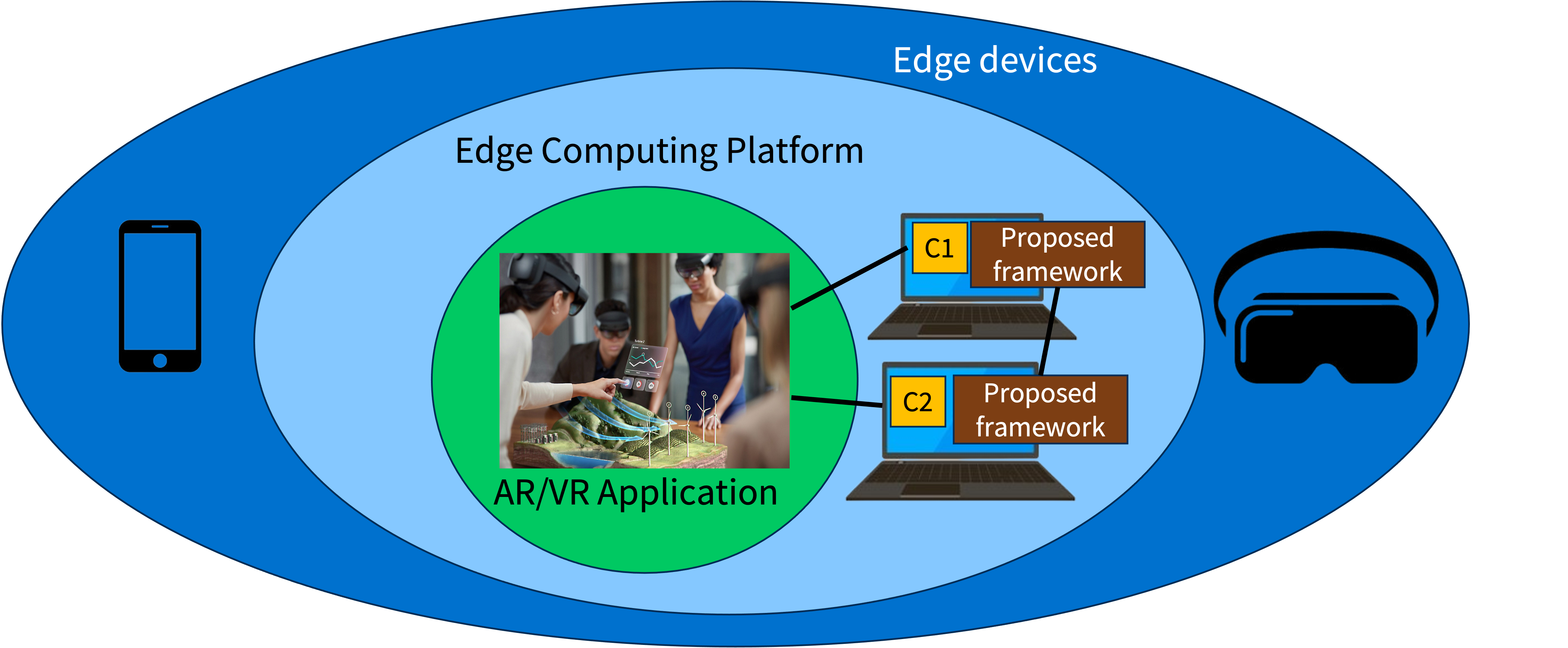
Many edge computing applications face problems due to user mobility, multi-tenancy and node/network failures. This is especially accentuated when the applications have critical timing requirements (a.k.a. ‘real-time systems’), e.g., augmented/virtual reality (AR/VR) systems, video streaming, industrial control systems or even autonomous vehicles. One way to deal with the aforementioned challenges is to migrate the real-time applications to different node(s) before its performance is downgraded or, worse, it crashes. But migration faces additional challenges as applications are often entrenched with the operating system or filesystems — requiring that a large amount of state be transferred, thus diluting (or even missing) the real-time guarantees.
To address these challenges, we propose Immigrant, a framework that combines, (a) real-time containers (lightweight isolation) and (b) a timeliness-aware migration mechanism (failure mitigation) with (c) a novel monitoring framework and an analysis engine (to decide when and where to migrate). We demonstrate the effectiveness of Immigrant using real-world applications 1 and show that the real-time QoS guarantees are maintained while increasing the resiliency of the overall system